Donnafugata plebiscite
The LeopardThe Donnafugata plebiscite is the local vote on the political union that gives birth to the new Italy in the town’s official record and exposes, in practice, how that record can be made. The announced result is unanimous, yet the narrative shows that Don Fabrizio expected dissent and later learns that Don Ciccio Tumeo’s negative vote was not counted as such. The episode sets the ceremony of national consent against the people whose choices it claims to represent.
Background and expectations
Before the vote, Don Fabrizio had advised people who came to him to vote yes. He considered the political change difficult to avoid and worried that humble townspeople might suffer if their opposition became known. But agreement with that advice was far from certain. He understood that some visitors might misread his words as irony, while others, suspicious of the new order or attached to the former one, would disregard them. Their reasons ranged from religious conviction and past obligations to the personal losses they associated with the upheavals.
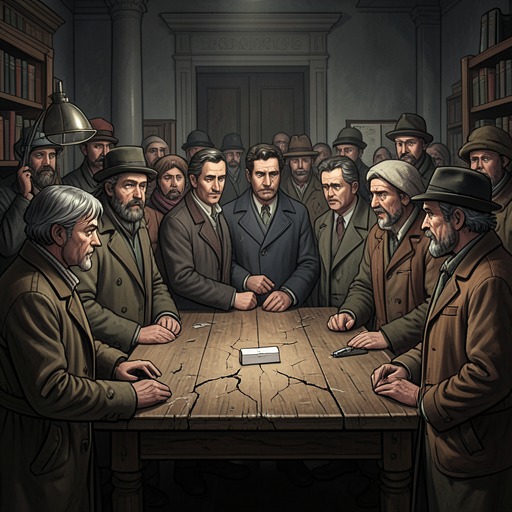
Don Fabrizio estimated that about fifteen among those he knew would vote no. Because those visitors represented only a portion of the town, he expected the electorate as a whole to include roughly forty negative votes. Thus the eventual official figure of zero no votes does not merely surprise him: it conflicts with his informed expectation of divided opinion. His own earlier dealings with royal authority deepen the episode’s political uncertainty. At audiences with King Ferdinand, he had seen courtly familiarity turn into a demand for information about Sicily; he declined to serve as a source of political intelligence. Leaving the court, he wondered whether a government based in Turin would differ substantially from the monarchy it replaced. The plebiscite gives that question a local, measurable form.
The vote in Donnafugata
On the grey, windy voting day, groups of young men moved through town wearing scraps of paper marked in favour of union. They sang La Bella Gigugin, its cheerful tune turned into a lament. Visitors from Girgenti spoke in a tavern about Sicily’s promised progress within a renewed Italy, while peasants listened without joining in. The scene places the confident language of national renewal beside the silence of people worn down by work or unemployment; it does not establish that silence as consent.
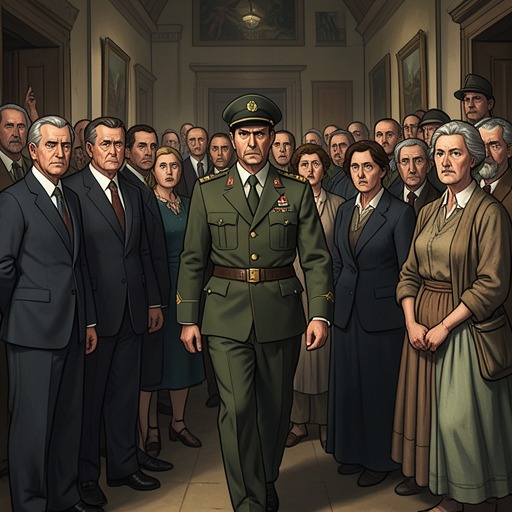
Don Fabrizio went to the Town Hall at about four in the afternoon, accompanied by Father Pirrone and Don Onofrio Rotolo. His clothing recalled an earlier visit to King Ferdinand, and, on the way, thoughts of the former king made him reconsider the failures of the old administration. At the voting room, the committee stood as he entered, and peasants who had arrived earlier were moved aside so he could cast his ballot without waiting. He handed in a yes vote to Don Calogero Sedàra. Father Pirrone did not vote because he had avoided being registered as a resident; Don Onofrio voted as Don Fabrizio had requested. Afterward, Don Fabrizio faced the gathering alone, while the other two stayed behind.
The proclaimed result and its exclusions
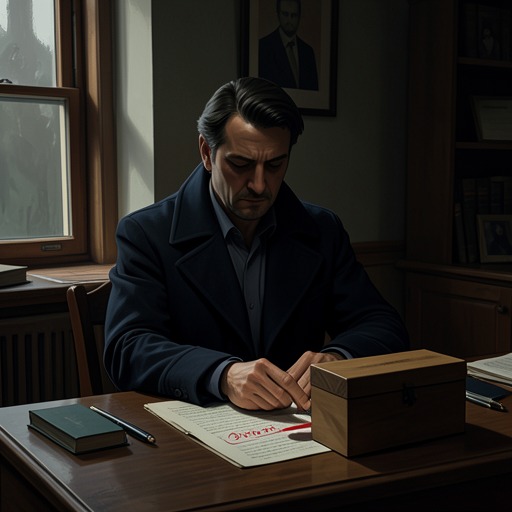
Late that night, Don Calogero announced the count from the Town Hall balcony: 515 voters, 512 voting, 512 yes votes, and no no votes. The figures present the town’s decision as complete agreement, although Don Fabrizio had anticipated a substantial minority against the measure. The announcement therefore converts a contested political choice into an appearance of unanimity.
The celebration makes that official version visible in public. Angelica Sedàra applauded from her balcony as speeches and fireworks accompanied messages sent to the new king and the general. Earlier, women had appeared in the square wearing tricolour ribbons in protest at their exclusion from the vote. They were jeered at and driven away, yet a newspaper in Palermo later represented their appearance as a patriotic demonstration greeted with acclaim. The episode thus presents two different forms of exclusion: women are kept outside the electorate, while the published account recasts their protest as support.
The erased dissent and the event’s significance
After the count, Don Ciccio Tumeo told Don Fabrizio that he had voted no. He said the Town Hall had transformed his choice into the opposite result, erasing his objection from the official tally. His account resolves the discrepancy that had troubled Don Fabrizio: opposition had not disappeared; at least one voter’s dissent had been suppressed. Don Fabrizio then understands the injury as the destruction of good faith, the very quality that should have been protected if the new political order was to justify its disruptive changes.
The narrative does not suggest that counting the negative votes would have reversed the result. Don Fabrizio thinks that even many more no votes would not have changed the outcome; recording them would instead have made the result more meaningful and avoided the violation of individual will. That distinction is central to the event’s political significance. The plebiscite establishes a new national reality in Donnafugata, but its manufactured unanimity undermines the credibility of the consent offered in its name. The town’s official celebration ends; Don Fabrizio’s unease remains, now attached not simply to the replacement of one government by another but to what has been lost in the act of claiming universal agreement.